


Introduction: a historic riverside walk along the Adige in Verona
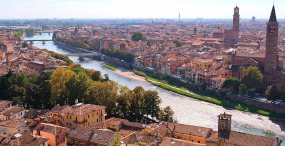
Walking through Verona along the Adige is like stepping into an open-air novel where every stone tells a chapter of history. Famous for the Arena opera house and the Romeo and Juliet myth, the city unfolds along the river into a maze of islets, bridges and shaded riverbanks that invite wandering, discovery and imagination. This historic walk follows the Adige from its calmer northern banks down into the river’s meanders near the medieval center, offering a continuous story that blends Roman remains, medieval fortifications, Renaissance façades and contemporary touches.
Contenu de l'article
In this article I lay out a detailed route for the curious traveler who wants to understand Verona at the pace of the water: the monuments to see, exact addresses, opening hours, ticket prices in euros, and practical tips to make the most of each stop. Whether you have a morning, a full day or an afternoon, this walk can be adjusted. It can be done on foot, by bike or using public transport, but walking is the best way to catch the play of light on façades, the smell of laundry on balconies, and the flutter of birds above the arches.
The Adige, long and capricious, shaped Verona’s soul: it served as a trade route under the Romans, a defensive line in the Middle Ages and a source of inspiration for poets and painters. As you follow its banks, you’ll see how civic and religious buildings cling to the embankments and how the bridges — witnesses to countless reconstructions — now link neighborhoods with very different atmospheres. You’ll encounter museums that tell the city’s ancient story, squares where locals meet for coffee, arcades that offer cool refuge in summer, and viewpoints perfect for taking in the river’s winding course.
This guide is not just factual: it’s sensory. It will describe the colors of walls at sunset, the sound of footsteps on cobbles, the taste of a cappuccino by the water. You’ll find precise addresses (streets and numbers), up-to-date prices and typical opening hours to plan your visit. I’ll also give useful local tips — where to park a bike, which ticket to buy to skip the line, how to cross bridges during busy times — so your walk becomes a smooth, rich and memorable experience.
Ready to go? Lace up comfortable shoes, grab your camera and let the Adige lead the way: from the austere majesty of Castelvecchio to the romantic lanes of Juliet’s House, every stop will be an opportunity to see Verona in a different light.
 Click here to discover Verona and the Arena on a walking tour
1) Start: Castelvecchio and the walls along Corso Castelvecchio
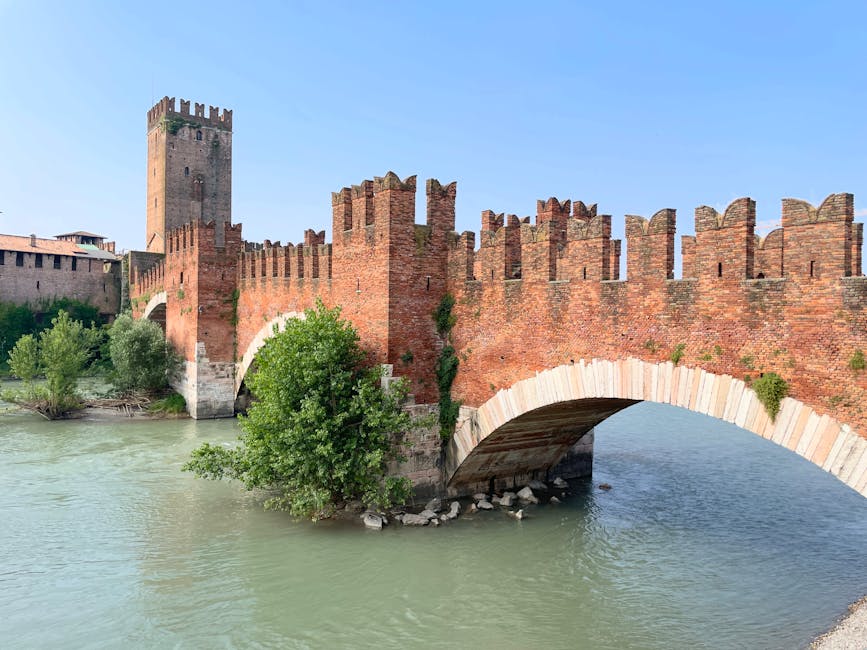
Begin your walk at the Museo di Castelvecchio, a must-see to grasp Verona’s historical layers facing the Adige. The museum is located at Museo di Castelvecchio, Corso Castelvecchio, 2, 37121 Verona VR, Italy. Housed in the rebuilt medieval castle renovated by architect Carlo Scarpa, it displays sculptures, paintings and arms that tell the city’s military and artistic history.
Hours & prices: typically the museum is open Tuesday through Sunday from 8:30 to 19:30, closed on Mondays. Standard adult admission is around €8.00, reduced €5.00, free for certain children and holders of European cultural passes; these times and fees may change — check the official site before you go. Entrance includes crossing the castle bridge, the famous Ponte Scaligero, which gives panoramic views over the Adige and the old town.
The site is especially photogenic early in the morning or late afternoon, when the ochre stone of the castle contrasts with the deep green waters of the Adige. Informative panels in Italian and English are placed throughout the rooms; audio guides are often available for around €3–€4. Allow 1 to 2 hours for a full visit.
Practical tips: arrive early to avoid queues and enjoy the low light on the bridge. If you’re cycling, there are bike parking areas near Corso Castelvecchio; avoid leaving visible items in baskets. From the museum, follow the south bank of the Adige to continue toward the historic center by crossing the Ponte Scaligero or by walking along via Diaz.
2) The Roman heart: the Arena di Verona and Piazza Bra
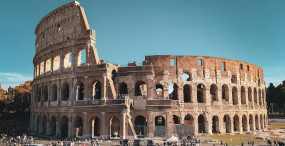
Continuing along the riverbanks, head to the broad square that opens onto the Adige: Piazza Bra, home to the iconic Arena di Verona at Piazza Bra, 1, 37121 Verona VR, Italy. Built in the 1st century AD, the Arena is a remarkably well-preserved Roman amphitheater still used for opera performances and open-air concerts, especially during the summer festival.
Hours & prices: tourist visits to the Arena are usually daily from 8:30 to 19:30 (times vary by season and events). Standard admission is about €10.00. For opera performances, ticket prices vary widely (from €15 to several hundred euros for premium seats); it’s recommended to book well in advance for the summer season.
Piazza Bra is also lined with cafés and restaurants where you can sit and admire the Arena. From the riverbank the view of the north façade is spectacular: you can make out the travertine tiers, the perfect ellipse and, beyond, Verona’s red roofs stretching toward the San Pietro hill. Don’t miss photographing the interior if you visit — the acoustics are exceptional.
Practical tips: buy Arena tickets online for events to avoid lines. If you visit in summer, bring water, a hat and plan for early morning or late afternoon visits to avoid heat and crowds. For a different perspective, head up to Bastione San Francesco (Lungadige San Giorgio) for a panorama of the Arena and the river. City buses and parking around Piazza Bra make it easy to reach if you’re coming by car.
Click here to book your Arena and city guided tour
3) Bridges and lanes: Ponte Pietra and Via Ponte Pietra
Continue by heading slightly upstream toward the east to reach Verona’s oldest and most moving bridge: the Ponte Pietra. A practical address for the site is Ponte Pietra, Lungadige Giuseppe Mazzini, 37121 Verona VR, Italy. Originally Roman, the bridge was destroyed during World War II and reconstructed stone by stone; today it stands as a symbol of the city’s resilience.
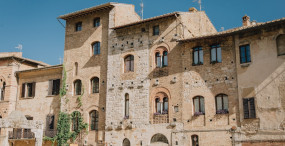
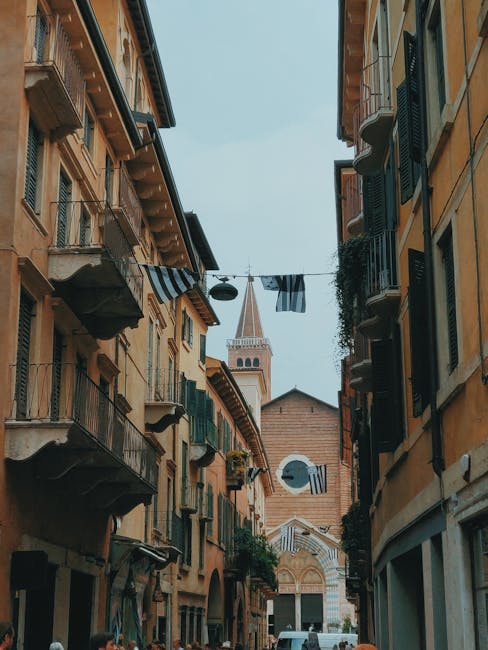
The neighborhood around Via Ponte Pietra and Via Sottoriva is a maze of old houses, small shops and cafés along the river. While wandering you’ll come across Via Sottoriva, one of Verona’s most photogenic streets, with colorful arcades and terraces where locals enjoy an aperitif in the late afternoon.
Access & hours: the bridge is freely accessible 24/7 with no entrance fee. Adjacent streets normally house shops open roughly from 9:00 to 19:30, with some closing between 13:00 and 15:30 for the pausa pranzo. Several small cafés and osterie serve local specialties throughout the day.
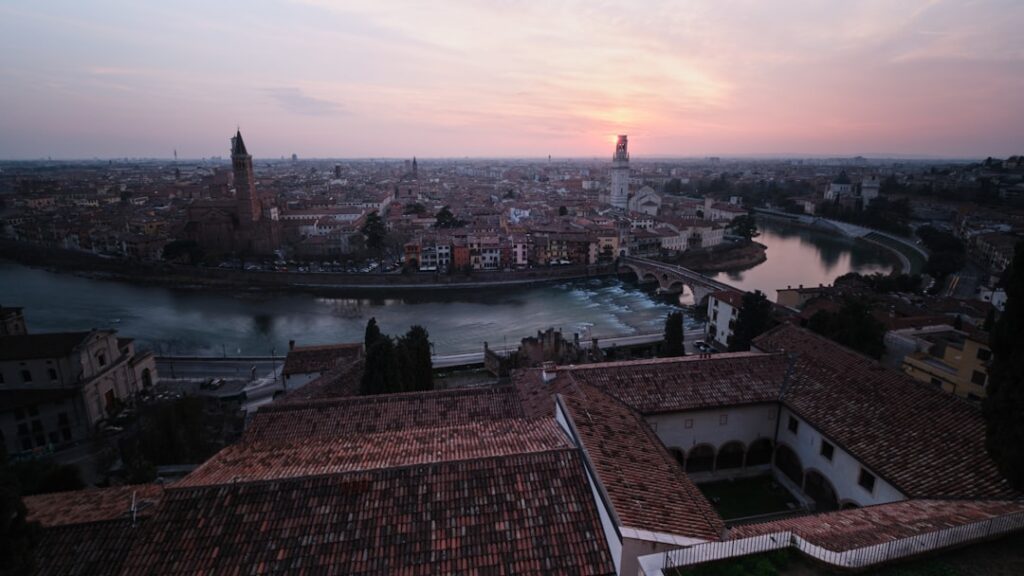
Immersive description: cross Ponte Pietra as the sun sets — the warmed stone gives off a golden glow and the arches cast silhouettes on the water. Then head down to the south bank for a less touristy promenade where locals walk dogs and shaded benches offer a quiet moment. Façades, sometimes covered in ivy, reveal pastel shutters and historical inscriptions carved in stone.
Practical tips: be mindful of local water levels and seasonal floods — although rare, they can make the banks muddy. Wear shoes suitable for cobbles. If you want a broader viewpoint, head toward Ponte Nuovo and take the funicular up to Castel San Pietro hill for sweeping views of the roofs and river.
Click here to book a cable car tour with aperitif
4) Religious and cultural heritage: Basilica di San Zeno and Santa Anastasia
Continuing westward or by turning slightly inland from the banks, two major religious buildings are worth an in-depth visit: the Basilica di San Zeno Maggiore and the church of Santa Anastasia.
The Basilica di San Zeno is located at Piazza San Zeno, 2, 37123 Verona VR, Italy. It is famous for its imposing stone façade with alternating light and dark bands and for the altarpiece by Mantegna (now often represented by a reproduction; the original is sometimes on loan at the Museo di Castelvecchio). Hours & prices: the basilica is typically open from 8:30 to 12:30 and from 15:00 to 18:00. Entrance to the basilica is often free, but access to the adjoining museum or certain chapels may cost around €3.00.
Santa Anastasia, located at Via Santa Anastasia, 2, 37121 Verona VR, Italy, is Verona’s largest Gothic church. Inside you’ll find remarkable frescoes and side chapels — a heritage that testifies to the city’s medieval artistic wealth. Hours & prices: generally open from 9:00 to 17:30. Entry may be free for worship, but tourist access to some areas can be ticketed (around €2–€4).
What to see: take time to study the carved capitals, stained glass and cycles of murals. The quiet of the Basilica di San Zeno contrasts with the riverbank bustle: it’s a good place to feel the city’s historical spirituality. Santa Anastasia, more central, makes for an easy detour from the Adige and a return via lanes full of craft shops.
Practical tips: art lovers should check temporary exhibitions at the Museo di Santa Anastasia and the Museo di San Zeno. Respect worship schedules (masses) and dress appropriately for entry to churches (shoulders and knees covered). If you visit during services, enjoy the remarkable acoustics by listening to a psalm or Gregorian chant.
Click here to discover Verona’s art and legends on foot
5) End of the route: viewpoints, cafés and practical tips for enjoying the riverbank
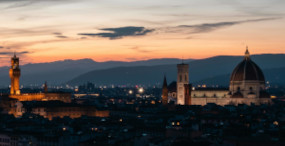
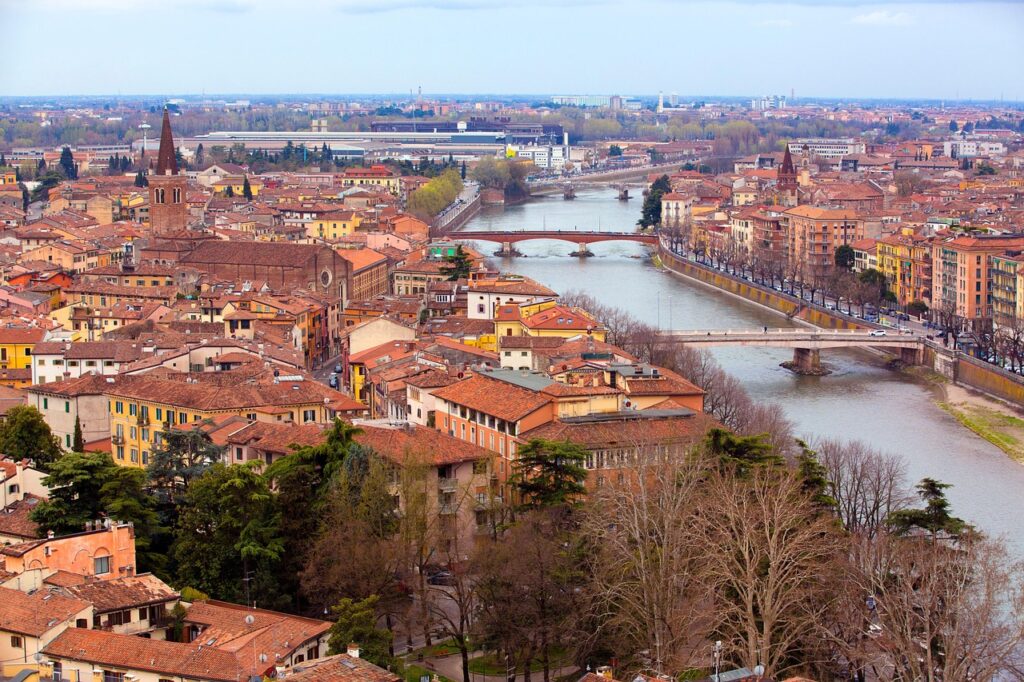
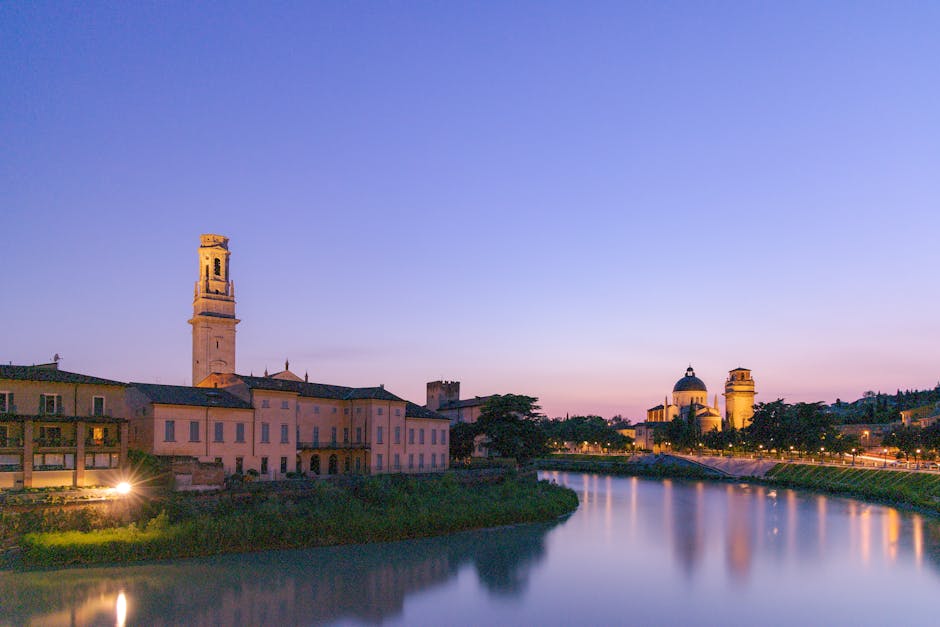
To finish the walk, head to viewpoints and cafés along the banks near the Lungadige e delle mura. Spots like Bastione San Pietro and the terraces near Ponte Nuovo offer spectacular panoramas over the Adige’s meanders and Verona’s red roofs. These high points are ideal at sunset, when the light silhouettes the monuments.
Useful addresses and hours: Bastione San Pietro (accessible from Via San Pietro, 37121 Verona) is a public space freely accessible. Recommended cafés and osterie nearby include Osteria Ponte Pietra (Via Ponte Pietra, 7, 37121 Verona) typically open from 12:00 to 23:00, and Caffè Borsari (Piazza Erbe, 30), close to the end of the route. Coffee prices by the river vary between about €1.20 for an espresso and €4–€6 for a cappuccino on the terrace.
Recommended activities: consider a treat stop for a handmade tiramisu or artisan gelato at a local gelateria. Photographers should favor the golden hour just after sunset for reflections on the water. Cyclists will find bike lanes along the Lungadige connecting main sights; bike rentals are available downtown around Piazza Bra (daily rates roughly €10–€20 depending on the model).
Local practical tips:
- Transport: the pedestrian zone in the historic center limits car access. Use motorway car parks or public parking like Parcheggio Cittadella (Piazza Cittadella) or the Porta Nuova parking. Prices vary by duration; expect around €2–€3 per hour.
- Safety: the riverside walk is generally safe, but keep an eye on belongings in very touristy areas and avoid muddy banks after heavy rain.
- Best time to visit: spring (April–May) and autumn (September–October) offer pleasant temperatures and soft light. In summer, go early morning or late afternoon to avoid heat and crowds.
- Combined tickets: look into local museum passes that include Museo di Castelvecchio and other sites; they can save money if you plan to visit multiple museums.
Click here to explore Verona by e-bike and enjoy the views
Click here to taste local wines during a city tasting
Conclusion: walking through history and keeping the memory of the Adige
The historic riverside walk along the Adige in Verona is more than a tourist route: it’s a lesson in human geography, a journey through time where architecture, religion, war and trade intertwine. Following the river you’ll pass historical layers — from the Roman era of the Arena and Ponte Pietra to the medieval defenses of Castelvecchio, and on to the intimate corners of churches and squares where daily life still flows. The precise addresses and practical details provided throughout this article (Museo di Castelvecchio, Corso Castelvecchio 2; Arena di Verona, Piazza Bra 1; Ponte Pietra, Lungadige Giuseppe Mazzini; Basilica di San Zeno, Piazza San Zeno 2; Santa Anastasia, Via Santa Anastasia 2) will help you easily plan this exploration.
Beyond the monuments, the true wealth of the walk lies in small moments: a musician playing under an arch, an old wrought-iron sign, the reflection of light on an arch, the smell of coffee brewed in an osteria. Take time to notice these details, talk to shopkeepers, sample a local wine at a riverside stall. The times and prices given — for example admission to Museo di Castelvecchio around €8, the Arena around €10 for the tourist visit, and cafés from about €1.20 for an espresso — provide practical benchmarks for budgeting your day, but keep in mind that seasonal variations occur and it’s always best to check official sites for updates.
Finally, a few last recommendations for a great experience: wear comfortable shoes, bring a bottle of water and some cash in small change for minor purchases, check opening hours for sites of interest (especially during religious holidays and the opera season), and allow time to get pleasantly lost in the lanes. This walk along the Adige is an invitation to slow down, listen and look: Verona will tell you its stories — if you take the time to hear them.