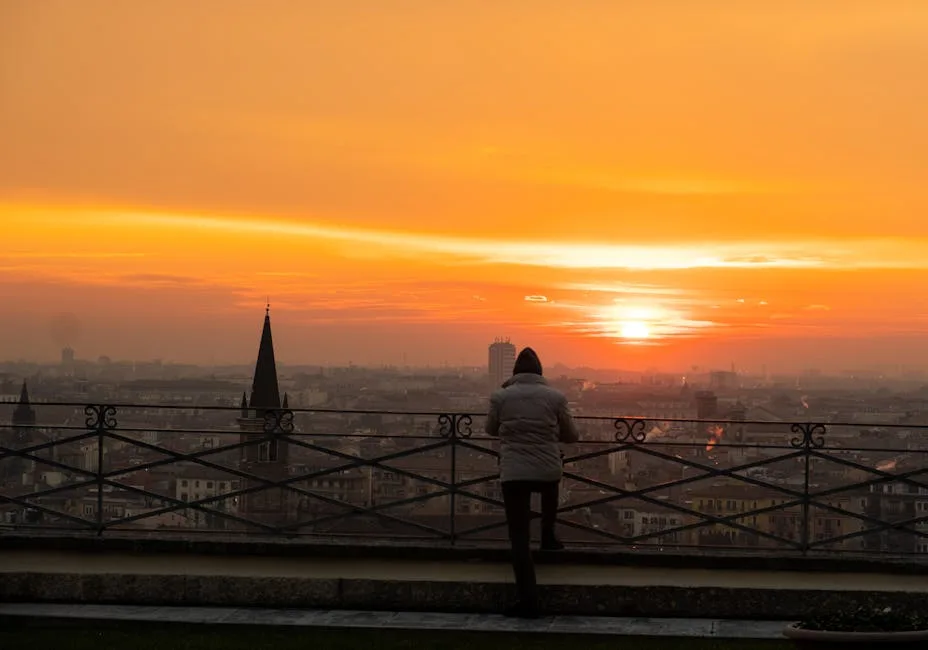






Introduction — Why a photo walk through Verona’s authentic neighborhoods
Verona, a UNESCO World Heritage city, is a place where every street tells a story. Beyond the usual romantic clichés focused solely on Juliet’s House, there are authentic neighborhoods — Veronetta, San Zeno, the area around Castelvecchio and the banks of the Adige — that offer rich and varied photographic opportunities: medieval textures, walls with golden patina, river perspectives and market scenes to capture. This guide is for any urban photographer — passionate amateur, cultural visitor or professional — looking to create immersive, documentary and aesthetic images of Verona.
A photo walk here isn’t just about « taking pictures »: it requires anticipating light, knowing addresses and opening hours, spotting viewpoints for the golden hour, and adapting your approach to respect the neighborhood’s pace and its residents. Below I describe concrete spots — with exact addresses, entrance fees where relevant, typical opening hours and practical tips — so you can plan your photo itinerary day by day. Corner markers, textures and scenes of local life (markets, craftsmen, terraces) are detailed to help you produce coherent, narrative series.
Before getting into details, a few technical and ethical recommendations: favor a wide-angle lens (24–35 mm) for alleys and architecture, a medium telephoto (70–200 mm) to isolate details and distant portraits, and a small tripod for long exposures on the riverbanks at sunset. In the historic center, respect privacy: ask permission before photographing people up close, especially in markets and places of worship. Finally, wait for the light: morning and evening bring warm tones to the local stone, while midday suits lively market scenes and cafés on terraces.
 Click here to book your private professional photo session in Verona
<img width="681" height="1024" src="https://ue.is/wp-content/uploads/sites/9/2026/06/piazza-delle-erbe-market-stalls-morning-verona-681×1024.webp" class="aligncenter" alt="Lively terraces on Piazza delle Erbe in Verona. » loading= »lazy » />
Veronetta neighborhood and Adige banks — riverside scenes, graffiti and reflections
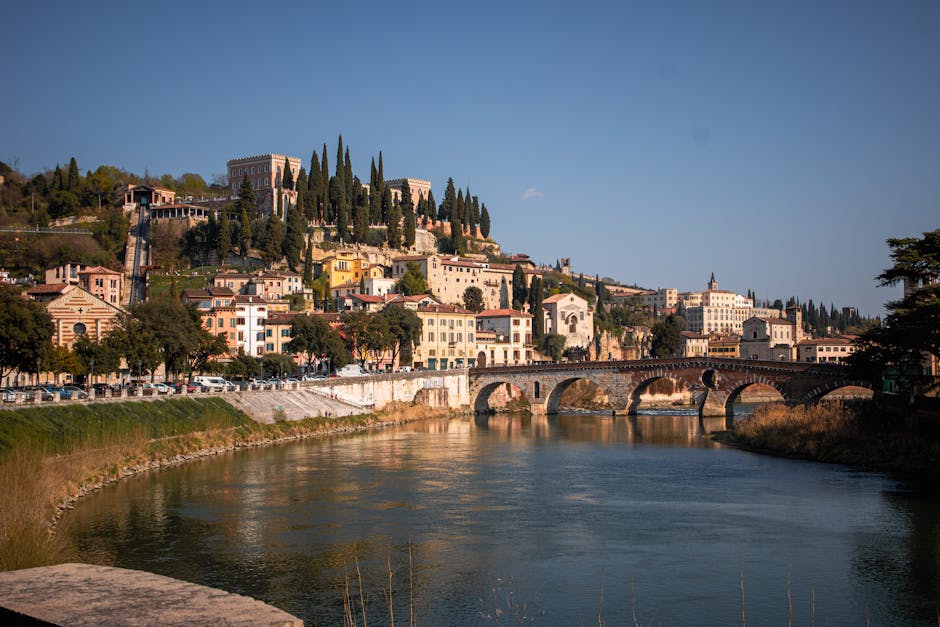
Veronetta, the left bank of the Adige just south of Ponte Pietra, is a living lab mixing student life, artisan workshops and small trattorie. For the photo walk, start on Lungadige San Giorgio and move along the river toward Ponte Pietra (Ponte Pietra, Lungadige Pietra, 37121 Verona). The colorful façades and water reflections offer excellent compositions at the blue hour.
Specific practical points:
- Walk along Lungadige San Giorgio, free access: ideal at sunset for golden reflections.
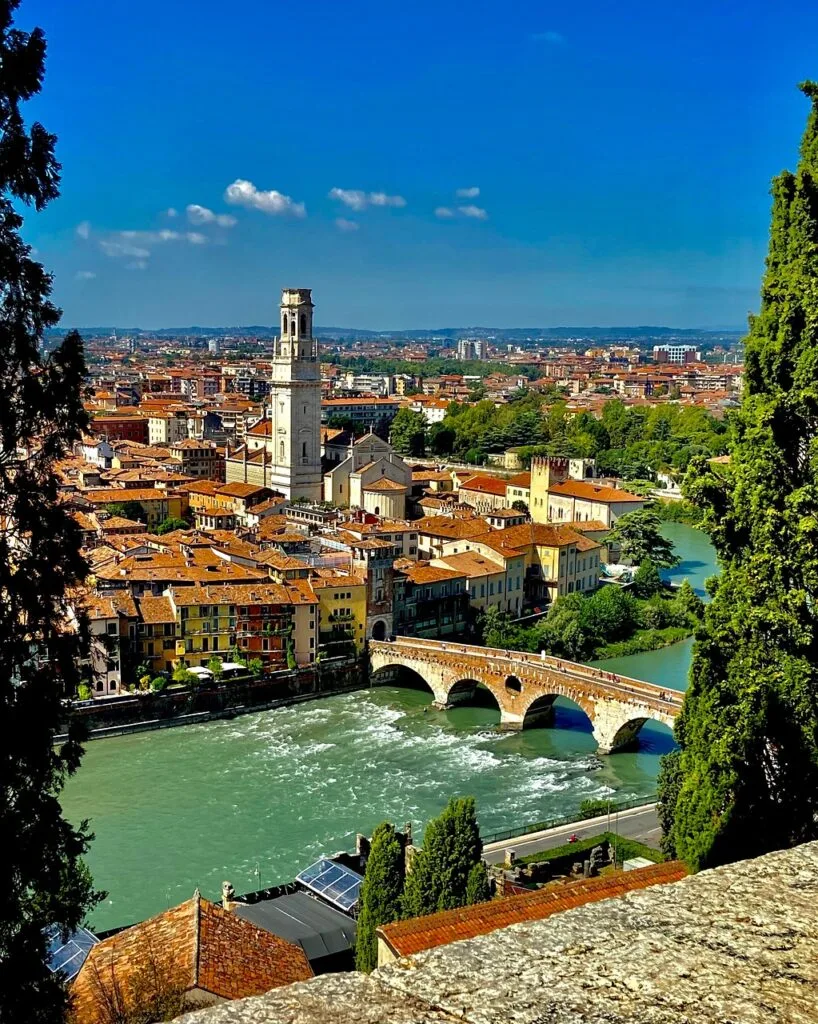
- Ponte Pietra (Ponte Pietra, Lungadige Pietra, 37121 Verona): rebuilt Roman bridge — viewpoint for diagonal compositions. No ticket required, accessible 24/7.
- Via Cantarane and adjacent small lanes: graffiti, art workshops and alternative cafés — perfect for environmental portraits. Respect private spaces.
Technical tips: for Adige reflections, use a slow shutter (1/4 to 1/2 s) and an ND filter if shooting in daylight; in the evening favor low ISOs (100–200) and stop down (f/8) to keep good depth of field. Look for contrasts between rough walls and the glass surfaces of newer structures for contemporary images. The neighborhood stays lively late into the evening, but be mindful of darker areas — keep your gear secure.
Click here to book a photographic tour of the historic center
San Zeno and sacred architecture — Basilica, lanes and local markets
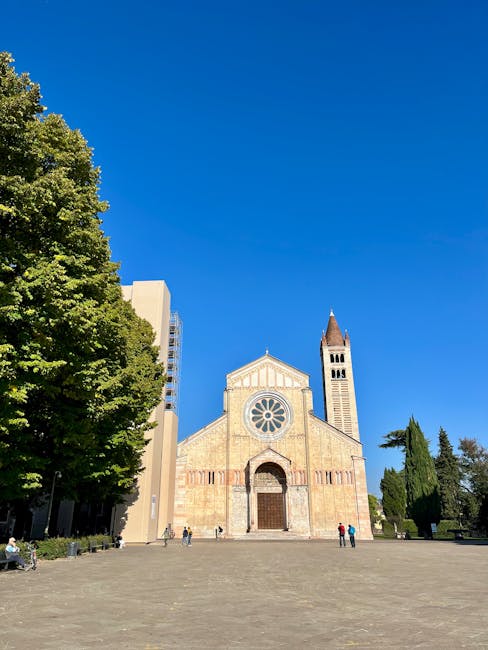
San Zeno is essential for anyone seeking Verona’s medieval soul. The spiritual heart is the Basilica di San Zeno Maggiore (Basilica di San Zeno Maggiore, Piazza San Zeno, 2, 37123 Verona). Its Romanesque walls, sculpted portal and cloister are ideal subjects for religious architecture. Entry to the basilica is generally free for the nave, but fees may apply for access to certain areas or temporary exhibitions (donation or sometimes €2–€5 depending on the exhibit). Typical hours: 06:30–12:30 and 15:00–19:00 (check according to season and religious services).
Nearby, Piazza San Zeno hosts terraces and local shops that create charming street compositions. Other spots to note:
- Chiostro della Basilica (cloister): stone texture, light and shadow play — often accessible during the basilica’s opening hours.
- Piazza San Zeno, 37123 Verona: morning café scenes — between 08:00 and 10:30, low-angle light flatters the façades.
- Local market and small artisan shops on Via San Zeno: textures, old shop windows and craftsmen’s hands.
Photo tips: favor prime lenses 35 mm and 50 mm to capture intimate portraits of artisans or visitors, and a 16–35 mm for the basilica’s full façades. Respect service times: avoid disturbing ceremonies and always ask permission before photographing inside. For intimate images, seek details — carvings, keystones, ironwork — and compose using the symmetry of the portal and arcades.
Click here to book a walking tour of the historic center
Recommended experiences to extend your photo walk
Bring your camera: try these activities to enrich and vary your photo route in Verona.
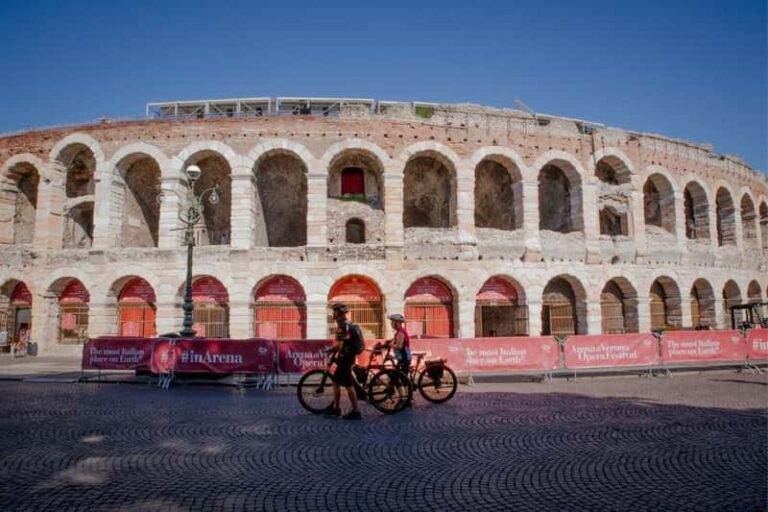
1. E‑bike ride
An active route to cover Veronetta, the Adige riverbanks and the hills quickly; perfect for multiplying viewpoints and panoramas at sunrise or sunset.
- ⏱️ Duration: 3 hours
- 🚩 Start: Central point near Arco dei Gavi (morning or afternoon departures)
- 📍 Route: Historic center → Torricelle → Castel San Pietro
- 🗣️ Languages: English
2. Private photo session
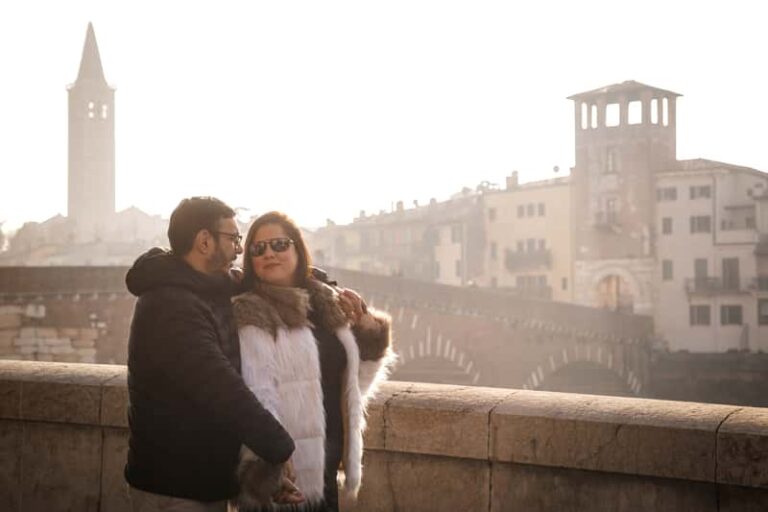
Professional portrait session to get polished images in 30 minutes or more, with a photographer‑guide to choose angles, light and delivered post‑processing.
- ⏱️ Duration: 30 minutes (options 30 min–1 h)
- 👥 Format: Private session, personalized guidance
- 🎟️ Included: Retouched digital photos delivered within 48 h
- 🗣️ Languages: Portuguese, Italian
3. Small‑group photo tour
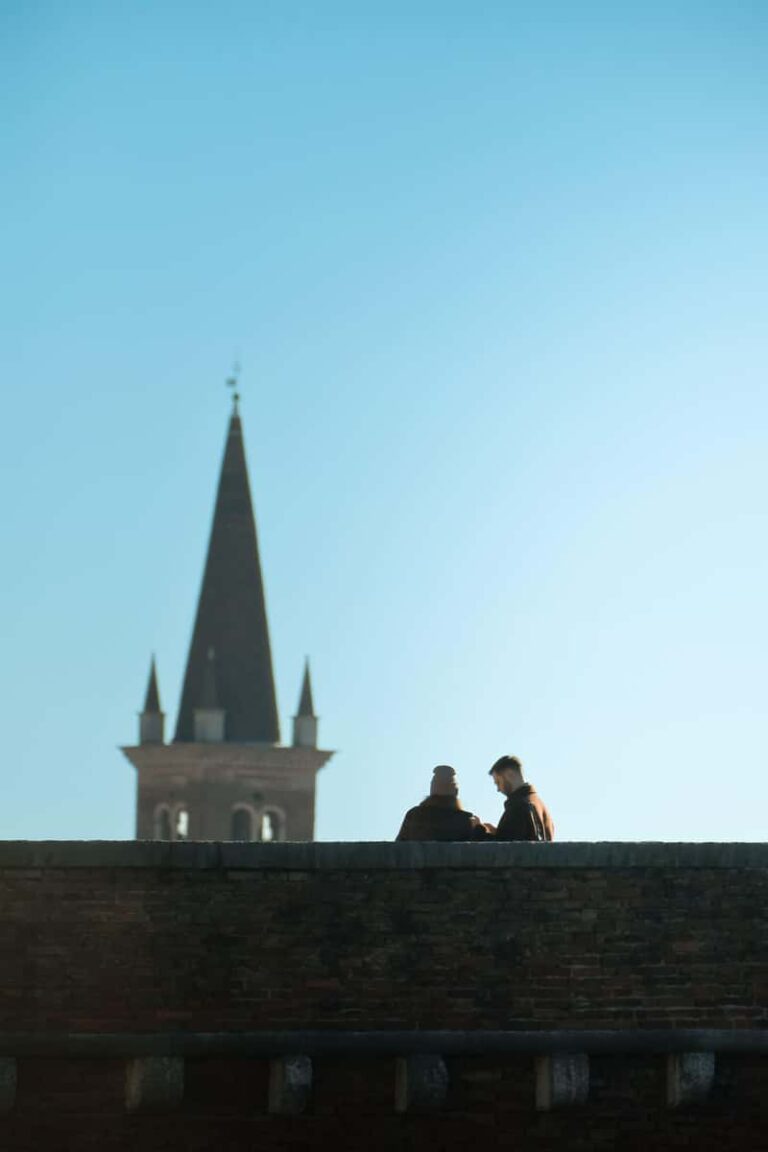
Walkshop focused on observation and composition: hands‑on practice, technical tips and an aperitif to close the session in good company.
- ⏱️ Duration: 2–2.5 hours
- 🚶 Format: Small group, educational approach
- 💡 Highlight: Training your eye before shooting
- 🍷 Food: Aperitif included at the end
Castelvecchio, Ponte Scaligero and Piazza Bra — history, red walls and sweeping perspectives
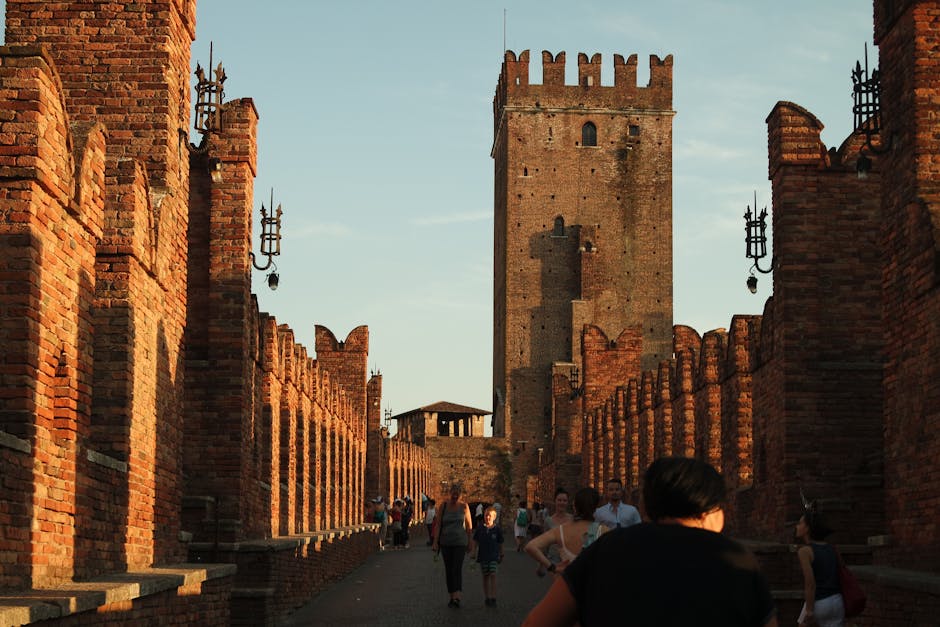
The complex around Castelvecchio (Museo di Castelvecchio, Corso Castelvecchio, 2, 37121 Verona) and Ponte Scaligero (Ponte Scaligero, Corso Castelvecchio, 37121 Verona) are must‑sees for military architecture and panoramic city views. The Museo di Castelvecchio is an art and history museum housed in a 14th‑century castle; usual entrance fee: €8.00 full price, €4.00 reduced (youth, seniors, conditions apply). Typical hours: Tuesday to Sunday 08:30–19:30; closed Monday (check holidays and temporary exhibitions).
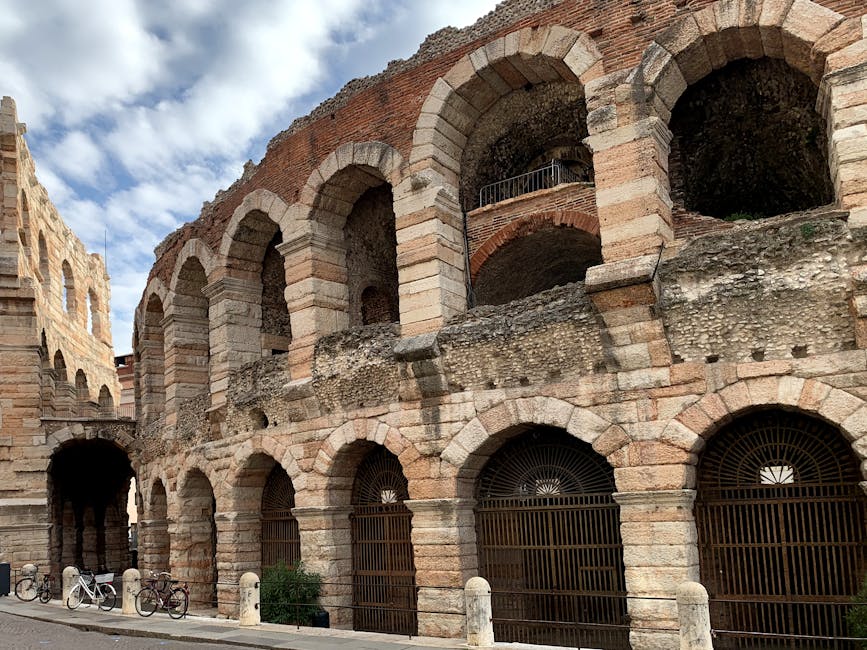
Piazza Bra and the Arena di Verona (Arena di Verona, Piazza Bra, 1, 37121 Verona) are more touristy but essential for grand compositions: the large square allows shots with the column, palazzi and the Arena arch in the background. Arena entry depends on events: guided tours and access to the museum or structure can cost between €10.00 and €12.00 for standard visits (Arena visiting hours often 09:00–18:00, depending on programming). The Castelvecchio—Ponte Scaligero—Adige combination offers alignments of towers and the reddish walls typical of Verona.
Practical tips: climb the castle walls for sweeping views over the river; the small museum houses sculptures and medieval works that will complete your story. At sunrise over Piazza Bra, the side light hits the Arena very photogenically — arrive early (between 06:30 and 07:30 in summer). For architectural details, a macro lens or an 85 mm is useful to isolate stone patterns and sculpted motifs on doors and cornices.
Click here to book a guided Arena tour with skip‑the‑line ticket
Markets and lively squares — Piazza delle Erbe, Via Sottoriva and everyday scenes
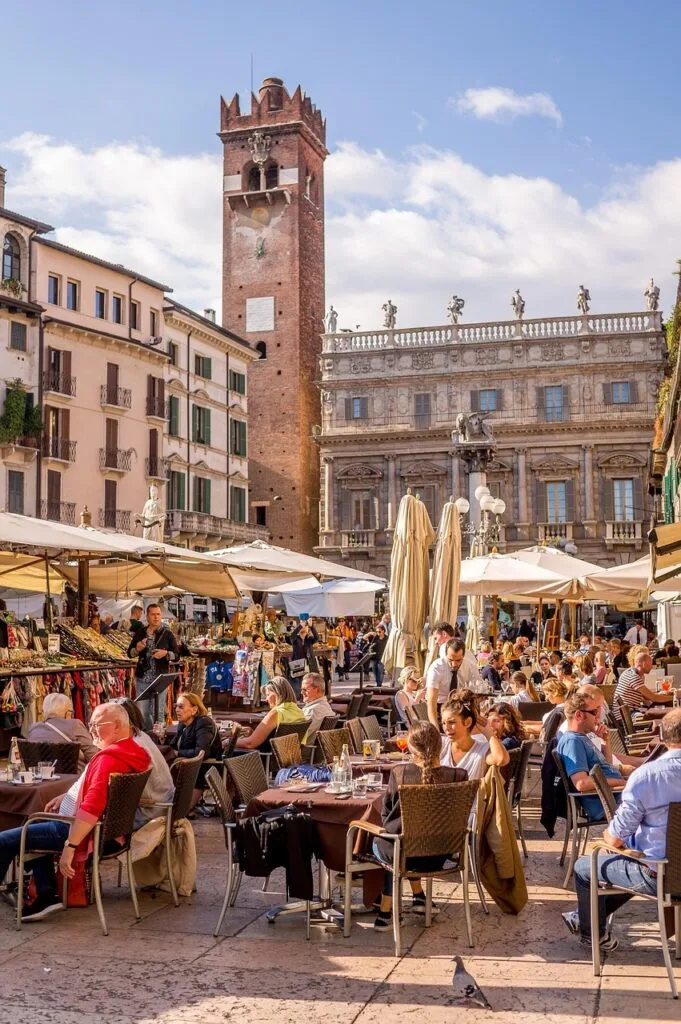
Piazza delle Erbe (Piazza delle Erbe, 37121 Verona) is the beating heart of historic trade. The daily market (approximate hours: 08:00–14:00, sometimes extended in the late afternoon depending on season) offers stalls of fruit, vegetables, flowers, souvenirs and local products. The arcades and the Madonna Verona fountain provide classic framing points. Via Sottoriva, the street running alongside the market, is known for its leaning façades and ancient signs, offering rich perspectives for urban photography.
Tips for capturing life: arrive early to avoid the crowds and catch vendors setting up their stalls (around 07:30–08:00). Look for repeating patterns (rows of baskets, jars, fruit colors) and use a medium depth of field (f/5.6–f/8) to keep enough context while highlighting your main subject. For merchant portraits, offer a small coin or buy an item: it eases the encounter and encourages natural poses.
Other useful points:
- Via Sottoriva (runs along the river near Piazza delle Erbe): low‑angle perspectives and reflections on wet cobbles after rain.
- Busy hours: 10:00–12:00 for the liveliest scenes; prefer 08:00–09:00 for cleaner, quieter images.
- Lighting: cloudy days bring soft, saturated tones—perfect for market colors.
Click here to book the market workshop to make fresh pasta
Conclusion — Building a visual narrative and tips to extend your exploration
The photo walk in Verona isn’t just a series of isolated images; it’s about building a visual story that reveals a city’s character: its medieval history, its people, its markets and riverbanks. By combining Veronetta, San Zeno, Castelvecchio and central squares like Piazza delle Erbe and Piazza Bra, you’ll get a full palette—from sculptural detail to urban panorama. Approach each neighborhood with clear photographic intentions: portrait series, texture studies, market reportage, or playing with architectural light.
To extend your exploration:
- Plan sessions at different times: early morning for empty alleys, and evenings for lively terrace scenes.
- Vary focal lengths and formats: panorama for views from the walls, 50 mm for portraits, macro for architectural motifs.
- Respect the local community: ask permission, offer a digital copy if possible, and support the businesses you visit.
- Check official opening times before you go: Museo di Castelvecchio (Corso Castelvecchio, 2, 37121 Verona) — ticket 8,00 € / 4,00 €; Basilica di San Zeno (Piazza San Zeno, 2, 37123 Verona) — access to the nave free (hours vary); Arena di Verona (Piazza Bra, 1, 37121 Verona) — paid visits depending on events, indicative 10,00–12,00 €.
Finally, treat Verona like an open book: revisit the same scene under different light, wander small alleys at random, and let yourself be surprised by unexpected details—a memorial plaque, a cat on a windowsill, a reflection in a stream. With patience and curiosity, you’ll drink in the city’s soul through your lens and bring back images that tell more than a simple trip: the experience of a living, ancient and deeply photogenic city.
Click here to book a day trip to Sirmione and the lake