





Introduction
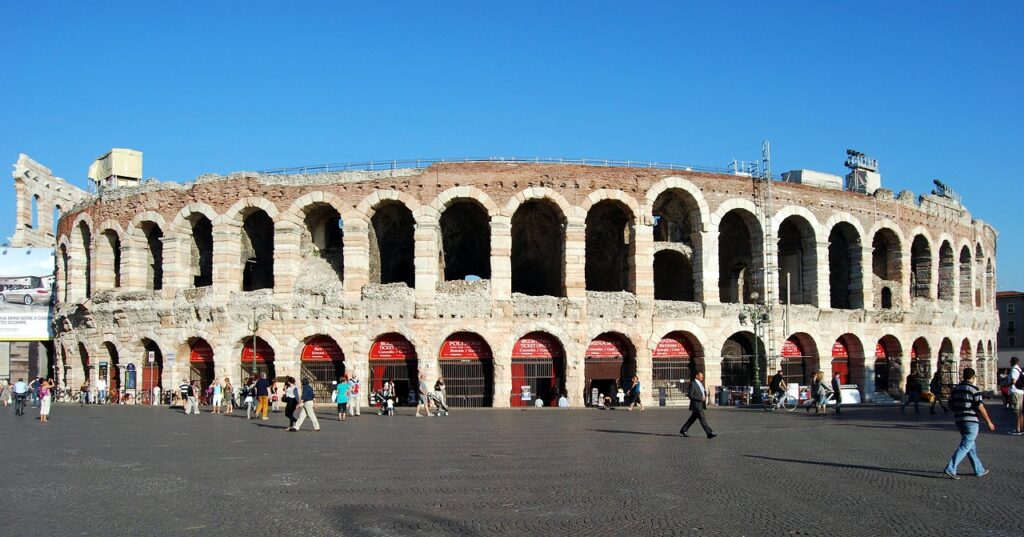
Visiting the Verona Arena means stepping into a place where Roman history meets Italian operatic passion, where the stones still echo ancient and modern performances. Sitting on the expansive Piazza Bra, the Arena di Verona is one of the best-preserved Roman amphitheaters in the world and remains a living cultural hub, largely thanks to the famous Verona Arena Opera Festival that draws thousands of international visitors every summer. When planning your visit, it’s important to understand both the monument’s architecture and historical timeline and the practicalities: how to buy tickets, best times to go, which areas are open to the public, and how to soak up Verona’s atmosphere before and after a show.
Built in the 1st century AD, the amphitheater has adapted through the ages — from Roman games to 19th-century bullfights, and to the spectacular operas staged there since 1913. Today the Arena retains its elliptical stone structure, its imposing tiers of seating and remarkable acoustics that allow unamplified voices to reach the back rows. Beyond the monument itself, the surrounding area — Piazza Bra — is packed with cafés, restaurants and historic buildings like the well-known Palazzo Barbieri (the town hall) and via Mazzini, which leads into Verona’s medieval heart.
This practical guide walks you through everything: the exact address, general opening hours, entrance fees and show prices, an immersive description of interior and exterior spaces, tips for buying tickets (online and on-site), getting around (bus, train, parking), accessibility for visitors with reduced mobility, suggestions for nearby attractions and local food recommendations. Whether you’re visiting as a tourist, attending a concert or seeing an opera performance, this guide will help you make the most of your time, avoid tourist traps and live a memorable experience in the shade — or under the starry sky — of the Arena di Verona.

Getting to the Verona Arena: address, access and opening times
Exact address: Arena di Verona, Piazza Bra, 1, 37121 Verona VR, Italy. The Arena sits right in Verona’s historic center, just a short walk from the main train station Stazione di Verona Porta Nuova and the old town. The main visitor access points are on foot via Piazza Bra and via Sant’Anastasia from the medieval quarter.
 Click here to book a day trip from Venice to Verona and Lake Garda

Transport access:
- By train: Verona Porta Nuova station (Piazzale XXV Aprile, 1) — a 15–20 minute walk to the Arena, or take city bus lines 11 and 13.
- By bus: several urban lines serve Piazza Bra; check ATV Verona for timetables and tickets.
- By car: traffic is restricted in the historic center (ZTL). Recommended parking: Parking Arena (Via Enrico Fermi), Parcheggio Cittadella (Viale del Lavoro) — expect a 10–20 minute walk depending on where you park.
- By plane: Verona Villafranca “Valerio Catullo” Airport (VRN) — shuttle or taxi to the train station, then bus or walk.
Opening times (for tourist visits): the Arena is generally open daily; however, hours vary significantly with the season and event schedule.
- High season (April–October): guided visits and site access are usually from 8:30 AM to 7:00 PM (last entry often around 6:30 PM).
- Low season (November–March): reduced hours, often from 9:00 AM to 5:00 PM; early closures may occur for rehearsals or private events.
- Opera evenings (summer season): doors typically open 2 hours before the performance; exact times vary by show.
It’s highly recommended to check current hours on the official Arena di Verona website or with Verona Welcome (Ufficio Informazioni Turistiche, Piazza Bra, 1) before you go.
Tickets, prices and shows: how to buy and what to expect
Entrance fees for tourist visits: prices change over time, but here’s a representative range for a self-guided visit to the Arena di Verona:
- Adult ticket (self-guided): around €12.
- Reduced rate (students, seniors): roughly €8–€10.
- Children (under 6): often free or a nominal fee.
- Combined entry and audio guide: approx. €15–€18.
These rates vary by year and depending on temporary exhibitions; visitors can buy tickets at the box office on Piazza Bra or online via the official site to skip queues.
Prices and booking for the Arena Opera Festival (summer season): each summer the Arena stages spectacular opera productions (Aida, Carmen, Il Trovatore, etc.). Ticket prices for performances vary widely:
- Standing room or economy category: from about €25.
- Seated tickets (bleachers): between €50 and €150 depending on distance and category.
- Boxes or premium seats: can reach €250 or more for top performances.
Opera tickets sell fast, especially for peak nights. Book months ahead via the Arena di Verona’s official website or authorized resellers. E-tickets are convenient: show them on your smartphone at the entrance or print them according to the vendor’s instructions.
Practical tips for buying tickets:
- Buy online when possible to avoid queues and secure your seat, especially in high season.
- For the opera, choose a seated ticket if you want comfort; bleacher seats are cheapest but can be uncomfortable for long evenings.
- Check the weather: summer shows are outdoors — bring a small blanket, sweater or poncho in case of rain.
- Arrive at least 45–60 minutes before doors open to avoid entry bottlenecks and enjoy the atmosphere on Piazza Bra.
Click here to book your opera tickets at the Arena

An immersive interior visit: architecture, acoustics and spaces to discover
The inside of the Arena di Verona is a sensory experience: from the towering seating to the warm limestone walls, every stone tells a story. The arena preserves a perfect ellipse made of three rows of arcades visible from the outside and interior tiers designed to maximize sightlines and acoustics. Guided tours often include access to underground passages, the counter-walls and some vantage points from the upper tiers.
Architecture and details:
- Structure: a Roman elliptical amphitheater with an original capacity estimated at about 30,000 spectators; today, for safety reasons, capacity for events is reduced (around 15,000–20,000 depending on configuration).
- Materials: local stone (limestone and marble for some finishes) showing patina from the centuries.
- Highlights: ancient boxes, access corridors, numbered benches, and a stage that can be adapted for opera.
Acoustics: one of the Arena’s wonders is its ability to carry powerful voices without heavy amplification. Opera singers, thanks to vocal technique and the venue’s layout, can reach the audience with astonishing clarity. For visitors, keeping quiet and respectful during rehearsals or performances allows everyone to fully appreciate this acoustic phenomenon.
On-site experiences:
- Guided tours (in several languages): offered at set times; they provide access to areas closed to self-guided visitors and give a full historical and musical context.
- Museums and temporary exhibitions: sometimes organized nearby or in adjoining rooms; prices and opening times vary.
- Photography: allowed for personal use; for professional shoots (professional gear, tripods, etc.) request prior authorization.
Click here to book priority access to the guided tour
Click here to discover the Arena at the time of the gladiators

Local practical tips: where to eat, stay and what to see nearby
Before or after your visit to the Arena, enjoy Verona’s urban delights. Piazza Bra is surrounded by cafés and restaurants serving Veneto cuisine. Here are some local recommendations and practical tips to make the most of your stay.
Restaurants and specialties:
- Trattoria Sapore diVino (local example) — typical address: Via Roma or near the center — look for dishes such as risotto all’Amarone (risotto cooked with Amarone wine), bigoli in salsa and local pastries from the pasticceria veronese.
- Ristorante Greppia (located near Piazza Bra) — often recommended for authentic Italian and regional dishes.
- For a quick bite: cafés on Piazza Bra and via Mazzini (pedestrian street) offer sandwiches, artisanal gelato and espresso — perfect for a break between sights.
Note: specific restaurant names can change; prefer places with up-to-date reviews and check for an English menu if needed.
Accommodation:
- Hotels nearby: Hotel Milano & Spa (Via A. Ognissanti, near Piazza Bra), Hotel Accademia (Via Scala, 12) — several 3–5 star hotels are within a 10-minute walk of the Arena.
- Guesthouses and apartments: plentiful in the historic center, ideal for longer stays and for living like a local.
Tip: book your accommodation months in advance if you visit during the opera festival; prices rise sharply.
Activities and nearby sights:
- Casa di Giulietta — address: Via Cappello, 23, 37121 Verona VR — Juliet’s house is a 10–15 minute walk from the Arena. Paid entry (around €6 for the museum and balcony).
- Castelvecchio and Museo di Castelvecchio — address: Corso Castelvecchio, 2, 37121 Verona VR — art museum and medieval fortress, a 15-minute walk from Piazza Bra.
- Ponte Pietra and riverside walks — stroll along the Adige for stunning views of historic bridges and city architecture.
Click here to book a Valpolicella visit and tasting near Verona
Click here to book your skip-the-line ticket for Juliet’s House

Accessibility, safety and tips to make the most of your visit
Accessibility: the Arena di Verona offers facilities for visitors with reduced mobility, but full access to all tiers can be limited due to the historic architecture. Accessible entrances and reserved seats are usually available for performances; it’s recommended to contact the ticket office in advance to reserve an accessible spot. Visitors using wheelchairs should indicate their needs at purchase time so staff can arrange appropriate assistance.

Safety and visiting rules:
- Baggage: during busy periods bag checks may be in place. Avoid bringing large luggage and follow staff instructions.
- Behavior: be quiet and respectful during concerts; smoking and excessive alcohol consumption are often prohibited on the tiers.
- Weather: for outdoor performances, bring warm clothing for the evening and a raincoat in case of storms.
Local tips:
- Arrive early: explore Piazza Bra, take photos and find your seat before doors open.
- Dine before the show: many restaurants offer quick menus timed for performances — book ahead in high season.
- Use audio guides: they provide enriched historical context if you’re visiting without a guide.
- Combine your visit with other sites: Casa di Giulietta, Castelvecchio, Eremo di San Giorgio (for panoramic views) — plan to walk between sights to fully enjoy the city’s charm.
Conclusion
Visiting the Arena di Verona is an experience that blends emotion, history and live performance. Whether you’re passionate about Roman archaeology, a music lover coming for an opera, or a traveler looking to soak up one of Italy’s most beautiful cities, the Arena offers a unique setting. The exact address — Arena di Verona, Piazza Bra, 1, 37121 Verona VR, Italy — makes it easy to include in any downtown itinerary. By planning carefully (buying tickets online to skip queues, checking opening times, choosing nearby accommodation and reserving restaurants in high season), you’ll turn a simple visit into a genuine cultural immersion.
Beyond practical info — approximate prices (visit: €12, shows: from €25), season-dependent hours, access from Stazione di Verona Porta Nuova — this guide emphasizes the importance of experiencing the place with respect: arrive early, be mindful of the Arena’s unique acoustics, and enjoy the sunset views over Piazza Bra. Don’t forget to explore nearby highlights like the Casa di Giulietta (Via Cappello, 23) and Castelvecchio (Corso Castelvecchio, 2), which round out the Verona experience.
Finally, whether you’re watching an opera under the stars or visiting the Arena during the day, take home the memory of a living venue where the past is not just observed but celebrated. Check official sources for up-to-date practical information before you travel, pack comfy walking shoes, bring your camera and, if you’re attending a performance, your finest outfit — the Arena di Verona is both a museum and a stage, and deserves to be approached with curiosity and wonder.