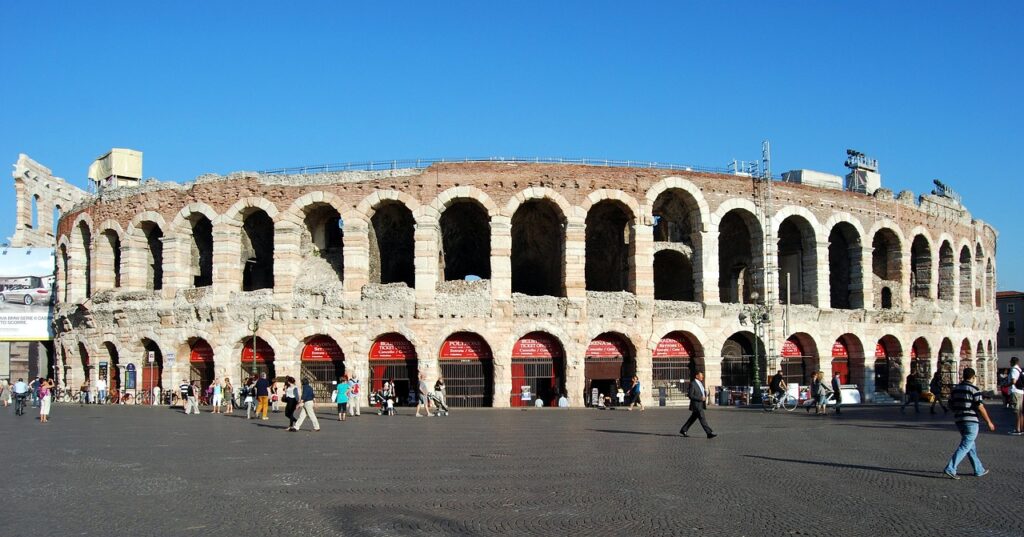






Introduction — Why the Arena di Verona Deserves a Crowd-Free Visit
The Arena di Verona, standing proud in the heart of the city on Piazza Bra, is one of the best-preserved Roman amphitheaters in the world and a living icon of Italian culture. Built in the 1st century, this arena has hosted spectacles, concerts and, most famously, operas for centuries, drawing hundreds of thousands of visitors every year. While an open-air concert under the stars is unforgettable, being crushed by daytime crowds can spoil the magic. Knowing how to visit the Arena without the masses turns a routine stop into a genuine historical and sensory immersion.
Visiting the Arena without crowds isn’t just about comfort: it lets you study architectural details, read the carved inscriptions, feel the venue’s acoustics and enjoy calm views across Piazza Bra and Verona’s rooftops. Strolling the outer perimeter, imagining ancient games and the applause from the tiers becomes possible when the site is quiet. You’ll also take better photos, enjoy a reflective moment and more fully appreciate why the Arena has survived through the centuries while still serving a social role.
This article offers a practical, hands-on guide to visiting the Arena di Verona without the crowds: best times and seasons to go, alternative routes and viewing spots, ticket and private tour options, plus recommended itineraries to extend your visit away from tourist flows. You’ll also find exact addresses and info on prices and opening hours, along with local tips for getting around on foot, by public transport or by bike. The goal: turn a potentially stressful visit into an intimate, memorable experience where history and emotion take precedence over the tourist crush.
Before we start, remember three simple rules: 1) favor off-peak hours (early morning or late evening), 2) visit outside the high season and 3) choose less direct routes that reveal unique vantage points. Apply these tips — and the alternatives I describe in this guide — and you’ll see the Arena of Verona as few visitors do: majestic, almost silent, bearing witness to a vivid past.

When to Go: Seasons, Exact Times and How Crowds Fluctuate
Picking the right time to visit the Arena di Verona is the key to avoiding crowds. Verona’s high season lines up with summer (June to September), when the Arena hosts operas and festivals and the city fills with domestic and international visitors. If a peaceful arena visit is your priority, favor the low-season months: October–November and February–March offer a good balance of mild weather and fewer people. December–January tends to be quietest, though holidays like Christmas and New Year can draw bigger crowds.
Typical opening hours for the Arena di Verona (except during special events): Arena di Verona, Piazza Bra 1, 37121 Verona VR, Italy
- April to October: 09:00 – 19:00
- November to March: 09:00 – 17:00
These hours apply to self-guided visits and access to the museum/arena floor when available. Note: access can be changed or restricted during events (operas, concerts), and the arena is often closed during daytime for technical setup. Always check the official Arena di Verona website before you go to confirm hours and performance dates.
To minimize crowds, the best timing strategy is: arrive right at opening (09:00) or even better, show up 30–45 minutes before doors open — there’s usually very little foot traffic and the morning light is ideal for photos. Alternatively, late afternoon from about 16:00–17:00 in low season is another sweet spot: the heat drops and most tour groups have left the center. If you plan to visit after a music event, wait at least an hour after the performance ends to let crowds disperse.
Also note that some weekdays are generally quieter: Tuesday and Wednesday often see fewer visitors than Saturdays or Sundays. Italian school holidays (Easter week, mid-April, August summer break) bring large crowds — avoid those if you can. Weekday mornings outside holiday periods give you the best shot at a nearly solitary visit.
 Click here to book tickets for an Arena opera performance

Routes and Vantage Points for an Immersive, Crowd-Free Visit
Avoiding the queue at the Arena’s main entrance also comes down to knowing where to stand. Start with a less obvious approach: instead of heading straight in from Via Roma or Via Mazzini, take adjacent streets like Via degli Alpini or Via Giuseppe Mazzini and stroll gradually toward Piazza Bra. These side streets offer unfolding perspectives and quiet cafés where locals go.
Top viewing spots to favor:
- Piazza Bra (northeast side): Position yourself on the northeast edge of the square for wide views without the main crowd usually gathered toward the centre.
- Via Roma (east side): A short climb to café terraces gives you a diagonal view of the façade.
- Ponte Pietra viewpoint: Cross the Ponte Pietra and watch the arena from a distance to capture the building in its urban context — especially beautiful at sunrise or sunset.
These spots not only give a better visual experience, but also help you resist the urge to stay stuck in the tourist stream near the main entrance.
Recommended calm itinerary (about 2 hours):
- Arrive 30 minutes before opening and grab breakfast at a local café (see practical addresses below).
- Enter via the main access on Piazza Bra, 1 and take a slow walk around the exterior to study the arches and ornamentation.
- Quick interior visit: check the stage, the seating tiers and test the acoustics from the arena floor.
- Exit toward Via Roma for a stroll to Via Mazzini then stop by Casa di Giulietta, Via Cappello 23, 37121 Verona — it’s often crowded, so visit late afternoon or off-season.
- If you have time, continue to Castelvecchio, Corso Castelvecchio 2, 37121 Verona (museum and bridge) for a cultural detour away from the crowds.
Click here to book a skip-the-line Arena and city tour
Click here to book your skip-the-line ticket for Juliet’s House
Tickets, Guided Tours and Alternatives to Reduce Waiting Time
Having the right ticket makes a stressful visit smooth. The Arena offers several options:
- Standard entry ticket (self-guided): adult price around €10, reduced €7 (youth/students/seniors with ID where applicable).
- Guided tours: often offered from about €12–€15 per person; these usually include priority access and informative commentary that enriches the visit.
- Combined tickets / Verona Card: the Verona Card is available in 24h or 48h versions; approximate prices: 24h ≈ €20, 48h ≈ €25 — these cards generally include access to certain museums and priority for some sites. Check inclusions at purchase.
These prices are indicative: always confirm current rates and conditions on the official Arena di Verona website or with local tourist offices before you travel.
Practical tips for buying tickets:
- Book online: Purchase tickets on the Arena di Verona’s official site to skip queues and to be notified of closures due to events.
- Avoid unofficial tourist packs: Some resellers offer expensive « skip-the-line » bundles that may not be worth it — read reviews and prefer reputable local providers.
- Choose a closed-group guided visit: Some local agencies run private « sunrise » tours before public opening — pricier (roughly €60–€120 for a small group) but they guarantee an empty-arena experience.
Click here to book your skip-the-line Arena tour
Local Tips and Practical Addresses Around the Arena
To make your visit even nicer, here are precise addresses, food suggestions and transport tips:
- Breakfast café: Caffè Borsari, Via Giuseppe Mazzini 9, 37121 Verona — great for a morning espresso and a cornetto before tackling the Arena. Approx prices: espresso €1.20–€1.50, cornetto €1.50–€2.50.
- Quiet restaurant: Trattoria al Pompiere, Via Sottoriva 11, 37121 Verona — traditional Venetian dishes; expect €15–€30 per person depending on the menu.
- Information point: IAT Verona (Tourist Information), Piazza Bra, 28, 37121 Verona — essential for checking hours and events.
Getting around:
- On foot: Verona’s historic centre is compact and most attractions are walkable from the Arena. Walking helps you avoid tourist buses that all funnel into Piazza Bra.
- Public transport: ATV city buses serve the area; buy a ticket at a tobacco shop or via the ATV app. Standard fare roughly €1.50 for a single ride.
- Bikes and scooters: City rental services are handy for exploring the Adige riverbanks and lesser-known viewpoints. Respect pedestrian zones and park bikes in designated spots.
More local tips to dodge the crowds:
- Choose accommodation in the San Zeno neighborhood or near Ponte Pietra rather than directly on Piazza Bra — you’ll avoid the daily tourist surge.
- Use Google Maps in satellite mode to spot quiet alleys and small squares offering alternative views of the Arena.
- Avoid happy hours around Piazza Bra between 18:00 and 20:00 in high season, when bars and restaurants attract large groups.

Alternative Experiences and Complementary Activities Near the Arena
If your aim is not only to avoid crowds but also to enrich your stay, consider complementary activities that steer you away from the usual tourist trails. After a quiet stint at the Arena, explore nearby spots often overlooked:
- Teatro Romano and the Archaeological Museum — Via Teatro Romano 2, 37121 Verona. The Roman theatre ruins and the small archaeological museum provide a peaceful contrast to the Arena’s bustle. Indicative price: €6–€8.
- Giardino Giusti — Via Giardino Giusti 2, 37129 Verona. A Renaissance garden that’s often less crowded than the main museums, ideal for a reflective walk; entry around €8–€10.
- Ponte Pietra and the Adige riverbanks — An evening stroll here yields picturesque views and a much calmer atmosphere than the central squares.
Themed visits:
- Sunrise photowalks: Join a small group or organize your own photo walk before sites open to capture the city in unique light.
- Opera workshops or rehearsals: Some local schools run workshops and demonstrations; attending a rehearsal (when permitted) gives insight into the Arena’s musical world without the paying public crowd.
- Off-the-beaten-path food tours: Taste Venetian specialties in osterie frequented by locals rather than tourists — ask staff at the café recommended above for a confidential tip.
Click here to join a historical gladiator-themed Arena tour
Click here to book a professional photoshoot at the Arena

Practical Recap: Checklist Before Your Visit
Here’s a compact, actionable checklist to ensure your visit to the Arena di Verona runs smoothly:
- Check official hours on the Arena di Verona website the day before: Piazza Bra 1, 37121 Verona — events may close public access.
- Buy tickets online (standard entry ≈ €10, guided tour ≈ €12–€15) or book a private tour if you want total quiet.
- Arrive 30–45 minutes before opening to enjoy an almost-empty square, or visit late afternoon in low season.
- Prefer weekdays (Tuesday–Wednesday) and avoid school holidays.
- Use alternative routes (Via degli Alpini, Ponte Pietra) for different views and fewer people.
- Dress appropriately for walking and for weather-dependent shade conditions.
- Keep your camera ready and respect signage and restricted areas during setups or rehearsals.
Conclusion — Enjoying the Arena di Verona Differently
Seeing the Arena di Verona without the crowds is entirely doable with a bit of planning, timing and thoughtful choices. By favoring off-peak hours (early morning or late afternoon), avoiding high tourist season and using the right tickets — online reservations, guided tours or private options — you’ll turn a potentially frustrating visit into a privileged moment full of history and feeling. The practical addresses in this guide, such as Arena di Verona, Piazza Bra 1, 37121 Verona VR, Casa di Giulietta, Via Cappello 23 and Castelvecchio, Corso Castelvecchio 2, will help you plan a coherent and enjoyable route.
Don’t forget the local tricks: pick a café off the square for breakfast, use back alleys to approach the arena discreetly, and consider cultural alternatives like the Teatro Romano or the Giusti gardens to extend your experience away from the crowds. Photos from a peaceful visit carry more weight: they won’t just show the monument but your personal encounter with history.
Lastly, keep respect for the site in mind — avoid food and bottles in restricted areas, follow staff instructions and maintain a calm demeanor to help preserve the place and ensure future visitors can enjoy an authentic experience. The Arena di Verona is a living treasure; seeing it without crowds lets you hear its ancient voice across time. Safe travels and enjoy the discovery!